The sheep's mother said Uh-oh, no,
perhaps not understanding that
a disability isn't equivalent
to a death sentence. And so
at the farm they cobbled together
a wheelchair, really a wagon
on wheels that it learned to drive,
pushing its nose against the joy-
stick. The grass is always greener,
the clover sweeter, over on the other
side. You can talk to the horses
and the cows in the meadow, cause
a chicken commotion, bask in a grove
where gumballs and chestnuts fall.
Apples dot the field with extravagance.
The softer the flesh, the more easily
bruised. The sweeter the ripening which
ripens when it's no longer expected.
In a Future Where the Sky will not be So Tired
I want to get to a future
where we'll worry more about
patching cracks in the drywall
than the collapsing of foundations,
where our neighbors don't leave
their houses for work with the fear
they might not be able to return.
I want to get to a future
where disagreement is just a sign
that there are many interesting paths
to the same clearing, but each of us
could still find the road, giving
friendly recommendations for snack
and dimsum stops along the way.
I want to know there's someone
who'll agree to come fix the broken
gate or help cut the grass, in the same
way I'll gladly pick up groceries or send
a package for them in the mail. Aren't there
those who have willingly and without question
donated a kidney to save someone in need?
When we arrive at that future,
I want it to be a place where apology walks
hand in hand with repair of the splintered,
with return of what was taken by force. Under
that sky, perhaps we'll finally understand
how to write history without muzzling
the tribunes and chroniclers in our midst.
The Benguet Road
(1900-1905)
What did it take to turn
puny horse trails into a road
cutting through the Bued river
and up raw mountainsides, make
rock surrender to pickaxe, dynamite,
brute force? In unyielding rain,
soldiers' boots filled with mud.
When scaffolds snapped, they and native
laborers tumbled over the cliffs,
disappearing into a green but forlorn silence.
In this land now the empire's new
possession, what was it they signed up
for, here so far away from their fathers'
farms in the midwest, the jobs turned down
at the glassworks factory in Poughkeepsie?
Promise of a cool Eden in the northern pastures,
a map drawn on top of existing landscape.
Commerce arriving after dispossession.
Deadheading
This cloudy day, you do deadheading of the brown and brittle blooms that never let go even as the cold strikes down all other vegetation. This small violence is supposed to encourage denser growth after winter, make vengeance out of luxuriant comeback. But this and other ordinary chores seem weightier or more premonitory than usual. The blades, precise but indifferent. On the stove, the kettle's strident hiss. In the mail, not a letter in flowing script but bill after bill, cramped with figures spelling out debt. You put away the shears, pour hot water into a mug for tea which you will drink with lemon and honey. You water the drooping pilea and in half an hour see it visibly revive. The laundry you fold smells of clean sunlight. Through the window, you see that the sky is still not blue, though it is still the sky.
Lament, with Prayer for Green
Our mothers' tears pool under the very
bridges. In every pot, their griefs melt clean
with marrow bones. They want to make
us strong, and so, feed fronds of torment
to the fire, drop sacs of bile and muscled
strips into the soup. Did you find a clutch
of red roses bleeding on the snow, crickets
interrogating piles of stuffed animals? Such
are the times we live in. Not atria or cool,
vaulted ceilings, no warm glow in windows
but vigils lit by candle-flame. Oak, sycamore
and pine line the avenues. Willow-braid
and damask magnolia, pale fronds of grass along
the shore. O moon floating detached above the broken
skyline, will you not promise even one green leaf?
A Difficult Hope
Listen when philosophers talk
about their memories of bunkers
and bleak years, but also when
they speak of hope. Envisioning
the future helps us act in certain
ways, so we might make that future
happen— a world where mycelial nets
underfoot give irrefutable proof
of the impossibility of borders,
where fields become living archives
of species we can name again in our
own tongues. I'm not saying
that atrocity did not happen,
that there are those who didn't will-
fully withhold aid as they blitzed
from world to world, torching what they
found for sport. I'm not saying forget how
destruction proceeds in methodical and
not random ways. The call to violence
at times can sound deceptively like prayer.
A congregation gathered on the steps turns
into a mob. History is a record. Poems
gather inventory of what we lose, grieve,
survive. This is how we remember.
I Can’t Go On. I’ll Go On.
- after Beckett
Here we are, making plans
to meet again soon in this new
year, to catch up over coffee or
maybe take a walk on a day that slips
rare warmth between weeks of cold
and miserable rain. As we did last
time, we'll bring updates— stories
of any small brightness despite
layoffs and a son's crippling
despair, the still raw grief
of a widow almost a decade after
her husband's passing. The news,
yet again, of blatant injustice.
Disappearances and deaths
in our neighborhoods, another
family bereft of a mother tonight.
What's worse is that evil, that snake
slithering through the grass since
the world began, has been ramping up
its falsehood campaign. How we should
just learn to wear something called
resilience in the face of loss. How,
since everything in life is provisional
anyway, we should cultivate an attitude
of resigned acceptance— Too much. No use,
give up. Can't expect to change it. But
what is it that instinctively makes us
wrap our arms around each other, open our
hearts inside unbearable sorrow? In such
holding, we feel the weight of what was
taken, what could still be lost. If
we did not hold each other, the world
would truly have ended. We would not
have the strength to set another place
at the table, to wrap a blanket
around the shoulders of the one
who can't stop trembling.
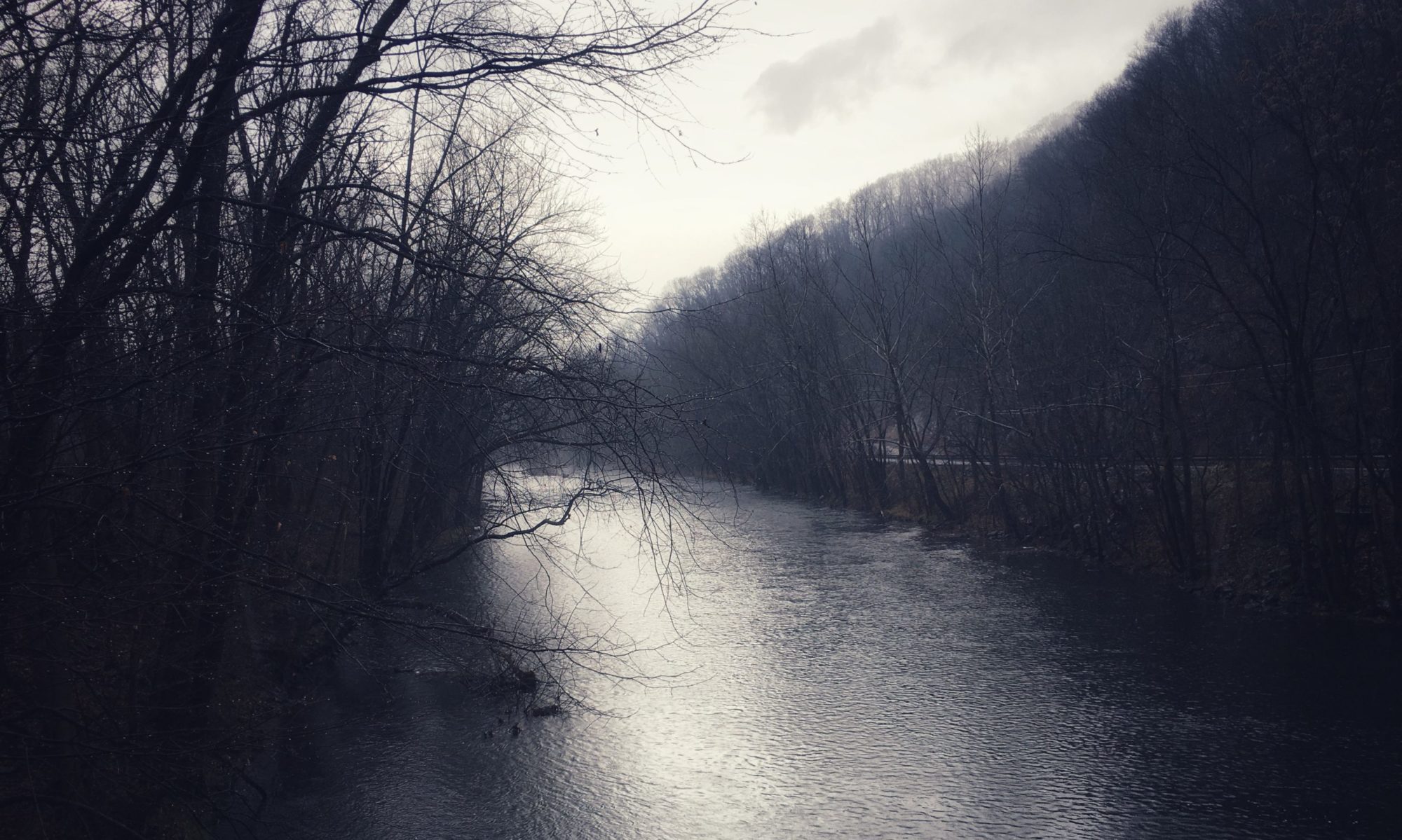
Small Graces
When I push open the screen door, plop
the garbage in the bin and snap the lid
back shut, the neighbor's dog two
houses over starts to bark. How tuned in
it seems to the smallest shift in its universe.
The sound it makes in reciprocation is either
alarm, question, or warning. The crows, too,
startle at my approach, though they are
quicker to size me up and dismiss me
as of no consequence to their foraging
in the gravel. I wish I could meet
the world with that kind of unerring
intuition, prickle to a presence that could
either be kind or unkind, well-meaning or
mean— and in that heightened watchfulness,
be more present. I know I've made my share of
wrong judgments, been ungenerous when I
could have shown more forbearance, less
defensive snarl. The cold afternoon light
still is light. The harsh weight of darkness
is hours yet away, and like mercy,
the moon makes an early show of its face.
Hunger Wakes Me
In the hours between midnight and morning
I dream of shadowed hills, the scent of night-
blooming datura spilling over our old home.
What was the question that nudged
me awake, that I know still
has no answer?
I have a memory of pork
smoked over embers, the mumbled
prayers of mambunong, rice
wine scattered on the ground
for blessing; knives slicing meat
to dress in a bowl with lime and pepper.
My tongue is always bathed
with longing. Daughter, I can't remember
anymore what it was that severed
us from each other. The language
for what I want to say scrolls
into the ether but its root
is still there. I want to believe
the broth hasn't cooled. I want to believe
we still drink from the same bowl.
Wonders of the World
Someone counted to seven, then
stopped. The great pyramid, the hanging
gardens of Babylon, a statue of Zeus.
The Temple of Artemis, the Colossus
of Rhodes, the Lighthouse at Alexandria,
the Mausoleum at Halicarnassus.
Such grandeur. But how does the tiniest snail
never scrape its head on the lintel no matter
how many times it goes in and out the door?
Who taught the tuberose and the night
phlox to dress themselves with scent
after the sun goes down?
While you sleep, your brain eats up
the debris it creates from doing all
the complex things it does.
A chicken was nearly beheaded
by an axe which missed its jugular
and most of the brain stem.
For over a year it was fed
with an eyedropper through
the odd-shaped hole in its neck.
Thousands of exhausting miles
from the sea, salmon and trout
struggle upstream to spawn.
Something about home— Wonder
in the ordinary stones, the astonishment
at how much the body can remember.

