Fire Report

This entry is part 16 of 54 in the series Morning Porch Poems: Spring 2012

The drone of planes against a bright blue
morning, winds that fan the charred smell
of houses going up in flames. One of the men
that has lost his home tells the TV reporter
how he picked up his daughter from her crib
and walked out with her into the day. And now
they have nothing. Nothing, that is, except
what they haven’t lost: thumb in her mouth,
sleepy head against his shoulder; curls
brushing his cheek, breath sweet with milk
kind neighbors put into a cup. He shakes
his head and repeats: What could hold
against such a conflagration? And yet,
night will not touch this cargo.


In response to an entry from the Morning Porch.

Attila József

George Szirtes:

I have translated only a little. That tone is hard to strike as well as keeping form. It is colloquial, romantic yet firmly rooted in realism. […]

Fat drops of rain on the roof,
          metallic pit-a-pat.
Cluck on old hen, brood me time,
          hatch me some of that.

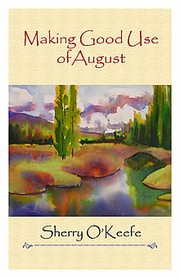
Making Good Use of August by Sherry O’Keefe

Making Good Use of August Making Good Use of AugustSherry O’Keefe; Finishing Line Press 2009WorldCatLibraryThingGoogle BooksBookFinder 
I read two chapbooks today, of which this was the second and much the more profound despite its lack of pretention (which the other had in spades). I’ve gotten to know Sherry’s writing through her blog, too much august not enough snow, which is consistently wonderful. This book of poems — her first — was no different. Like her nonfiction, her poetry is lyrical, narrative, and deeply rooted in a landscape that most of us think of as a vacation destination, when we think of it at all, but Montana is O’Keefe’s ancestral home. And while she clearly loves the land and spending time outdoors, she doesn’t try to pretty it up. When she was a kid, and her own family struggled to get by, a school-bus friend

lived in a shack with a two inch gap
around the front door. Dark winter mornings
kerosene light leaked out. She stayed warm
by wearing three dresses while she slept.
She told me she switched them so it seemed
as though she changed her clothes.
(“Bus 16”)

O’Keefe’s tales are often laconic and leave the reader with some work to do, which I like. I had to mull over “Approaching Strangers” for a couple of minutes after I read it, and I’m still not entirely sure I understand what the protagonists were up to.

He tells us he is lost.
I reach through the window as though to draw
a map in the margin of yesterday’s newspaper.
How to get to where you never wanted to go.

Add to this necessity of sitting with the poems for a little while to unpuzzle them, the sheer variety of ways in which O’Keefe plumbs the mysteries of human motives, and the book ends up seeming much longer than its 25 pages; there’s a spaciousness to it. What exactly is “the story behind my neighbor’s blue spruce,” you may find yourself wondering on first read of the piece so titled. Does she in fact cut down the tree as she seems to want to, and if so, why? Then the fact that it’s a blue spruce begins to sink in…

I’ve been re-reading the Icelandic sagas lately, something I do every few years, and marveling as I always do that such great works of literature could’ve emerged from a land so rural and thinly settled that there was not a single village, let alone a market town or city — things we tend to assume are essential for literary culture to thrive. But perhaps extreme landscapes select for unique and extraordinary characters. In her bio, O’Keefe “credits/blames her Irish heritage for her story-telling ways,” but what made her ancestors choose to stay in Montana?

For as anyone who’s ever grown up way out in the country can tell you, leaving isn’t hard. It’s choosing to be content where you are that requires a little extra grit. I agreed with “Gas Station Guy.” He likes to describe the weather in terms of distant places:

“There is a touch of Seattle
in the air today, but tomorrow Phoenix
will blow in.” He shook his head ‘no’ when I asked
if he ever wished he could breathe
the real Pacific air, feel the Arizona heat. The trick
to life, he said, is to like it where you live.

In “The Way My Wipers Work,” a cloudburst forces the protagonists to pull over because the windshield wipers in her old pickup truck stop working, as they are wont to do. The travelers decide to take shelter under a tarp in the bed “to listen and share shivers.” In this poem, as in the title poem, a broken thing is regarded as source of good fortune: the couple gets closer under the tarp.

The wind
jostled and the rain dumped down. Thunder
snapped around us. I curled into his quiet
faith of living head-on, trusting
in the storm.

Making Good Use of August, too, is a book to curl up with. I don’t know if I’ll ever get to visit Yellowstone country for real, but reading O’Keefe seems like the next best thing.

Almost “Almost Invisible” by Mark Strand

Almost invisible Almost invisibleMark Strand; Alfred A Knopf 2012WorldCatLibraryThingGoogle BooksBookFinder 
Let’s say that night has come and the wind has died down and a male cardinal, his iconic crest and red feathers invisible in the darkness, flutters overhead in the portico rafters as you step outside and pass quickly to the garden walk beyond to avoid getting shat on, and the noise of the wings reminds you of the riffling of pages by a disappointed reader of a new book, ordered in hardcover because it was on sale at Amazon and how could you go wrong with such an author, who once served as Poet Laureate and who translated one of your favorite Spanish poets, Rafael Albertí — besides which it’s prose poetry, one of your favorite things; and let’s say that your nostrils prickle at the smell of rain and you remember as you sometimes do an incident long ago, in the 4th or 5th Grade, when the fastest runner in the school ridiculed your assertion that rain could have any kind of smell, and because you wanted to like him you said nothing, though his arrogance rankled and this very minor exchange stuck with you and continues to color the pleasure you take in the smell of rain even four decades later, adding a dash of melancholy as you unzip and begin to urinate into the darkness on the far side of the driveway and a sharper, earthier odor begins to take its place, and you recall what your girlfriend said earlier about the poet’s heavy, elephantine playfulness lurching bathetically into a kind of Dr. Zhivago-esque mood which seemed not only out-of-place but unearned, because isn’t that really how this whole spring has felt so far — the absurdly early heat wave followed by a cold April; now let’s say that there is a halogen flashlight in the house and you toy with the idea of fetching it and scanning the edge of the woods, where you’d probably pick up the eye-shine of a deer or two, or possibly a raccoon, but remembering the poet’s words, you intone the dark is my freedom and my happiness, zip up and go back inside to peer into the glowing well of your ancient and cumbersome computer.

Kissing the Wound

This entry is part 14 of 54 in the series Morning Porch Poems: Spring 2012

For Lent, the rule was no sweets, and fish
on Fridays; less music on the radio, less TV,
less rowdiness and laughing in general (but one
could giggle behind one’s hands if necessary).
And on Holy Thursday we went to church to see
a row of unshod men seated before the altar,
waiting for the priest to wash and dry and oil
their feet: the plumber, the carpenter, the banker,
the fire chief, the kanto boy, the grandfather.
On Good Friday flagellants paraded down
the streets, vermillion stripes growing across
their backs, rude thorns circling their brows.
And in the evening we visited six or seven
churches, tiers of votive candles keeping vigil.
In the middle of the aisle, statue of the body
crucified, laid prone on a cloth of blood-red
velvet. After all these years, this is what I
remember most: the cold, pale arch of the foot,
the painted-on wound on painted flesh which,
bending, we were meant so reverently to kiss.


In response to an entry from the Morning Porch.

Instagrim

The first mobile apps were gallows.
The imagineers who discovered the New World
built them everywhere they went.
It wasn’t enough merely to capture souls;
you had to add a glow of piety
& an instant patina of terribly original sin.
For their part, the Indios etched
& painted on the open-source platform
of their alluring skins:
here a bird, there another bird,
a painted-on smile around the lips
or a ladder of tears, tattooed down
the smooth touch-screen
of a still-warm cheek.

Lament

This entry is part 13 of 54 in the series Morning Porch Poems: Spring 2012

What would I give to be a vein on the side of the red maple whose leaves tremble in the wind? I want to be plucked like that again, tuned to singing. The bees stumble into the storm door and later, there are clumps of yellow, tracks the color of fenugreek or pine bombs or birch. Little pools by the road film over with pollen, daubed thick as paint. The light can hardly strike where all this matter congeals. I cannot ignore it. I cannot turn away. I want to scour every pot I own until each grainy bottom reflects a face which used to match the corona of blue flame heat for heat, glare for glare. Every now and then I crave the iron taste of swamp spinach, the thin scraps that tether marrow to the inside of bone. Something true, unapologetic; something that doesn’t merely settle into the background, fade into the atmosphere, trick you into thinking this is all there can be, and nothing more.


In response to an entry from the Morning Porch.

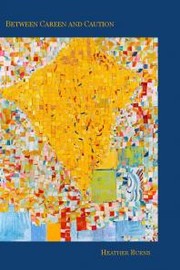
Between Careen and Caution by Heather Burns

Between Careen and Caution Between Careen and Caution: PoemsHeather Burns; Seven Kitchens Press 2011WorldCatLibraryThingGoogle BooksBookFinder 
This is one of the more aptly titled collections of poetry I’ve read in a while. It comes from a line in a poem called “Mile Marker 25,” which begins:

Am I on danger’s road, thoughts in motion
Toward the washed-out bridge around the blind curve?
Quick, choose between careen and caution,
Count what I want most, what I’d lose, now swerve
To miss the fox and clip my ghost instead.

And the book does do some wild swerving between poems that are stylistically and semantically cautious and those that threaten to fly apart at the seams. In the former category is a poem like “Comet,” a perfectly comprehensible and well-constructed pantoum, which I must admit, despite my distaste for pantoums and villanelles in general, makes very good use of the typically claustrophobic effect of all those repeating lines, describing a couple’s failure to get out of their too-small apartment to drive out into the country and view a comet. In the latter category, “Bringing in Laundry Before Storm” begins with a fairly random grab-bag of words, and only begins to make sense in the second stanza:

Thunder bulge tree’s crown
Maroon sky hum surgical thread loom

Porch dark as orchard
Cats flick and thump tails

So suffice it to say that Burns covers a lot of ground in just 21 poems, from the sonnet in the voice of a Confederate soldier that begins the book to the wonderful “At a Loss for Words” with which it concludes. Her favorite image (if that’s the word) is wind and her favorite topic is language and the difficulty of communication — and yes, sometimes they come together, as in the poem “General Delivery”:

I left home because Isabelle asked: What is West?
In part, it’s the porous bone of sky bleached and beached in red sand.

The wind plays its little jokes at the canyon rim,
Hurls itself down like a suicide, then yells for help.
You see it on the other side, laughing at its
Throw-the-voice trick.

(Read the whole poem on the publisher’s website.)

Burns is also good at conjuring shape-shifters, such as the “half-minding thin child” in “A Made Place” who “hides with her shadow / Between sheets on the clothesline” and eventually becomes

green inside,
Springy like crisp grass.
Shimmies the trunk of the skeleton tree
And hangs a picture of the sky on the sky.

The day itself is imagined as a shape-shifter in another poem, “Drunk Sun.”

The moon’s eye is half-shut and day hopes that nag
Won’t be looking for a good time tonight—ah—night’s
Now and day’s misthought its bounds again.

A restless, experimental spirit animates this fine first collection, which in its variety mirrors The Seven Kitchens Press Editor’s Series as a whole. Kudos to editor/publisher Ron Mohring for selecting it… and then working his usual magic on the design and execution.

Exit Strategies: a videopoem chapbook by David Tomaloff and Swoon Bildos

Exit Strategies (A bloodletting)

by Swoon Bildos
Videopoem chapbook for Exit Strategies [PDF] by David Tomaloff (Gold Wake Press, 2011)

Entry. We are submerged in motion, unable to stop or focus. A shadowy figure in the near background draws our gaze — the only still thing, until it starts slowly walking out through what look like waves. The colors are warm and the instruments in the soundtrack seemingly acoustic, though difficult to identify beyond genus. Simultaneous with the beginning of the poem recitation, a female face appears. She too eventually turns away from us and begins moving away. “Exit Strategies.” Is she the same as the first figure at an earlier point in time? Regardless, is this not how we perceive ourselves moving through familiar spaces, memories of previous journeys over-layering, adding thickness and nuance like ghosts of our own past? The poem says:

You are never alone in the being alone, and the wolves will open up, show you the light if you let them. … Steady now, and breathe. A circular motion. The turning of a screw. A radio going silent in the warehouse of a mind.

Wave. In this second video, the movement is more frenetic, swooping, diving, but there’s a pattern to it, a kind of Tourette’s. The colors are darker and redder; it might be sunset. “Maybe the trees will take us for granted. Maybe they already have.” First a fire plug and then a bulbous water tower dance in and out of view. “You and I … you and I…” The refrain-like structure of the poem is echoed by the film’s repeated sequence of a flag or stringless kite billowing and falling to the ground. “Nearer to the edge of the forest” says Tomaloff, and there are trees visible on the screen. This unusual conjunction of word and image seems like an accident, maybe an oversight comparable to Swoon’s misspelling of the publisher’s name in the credits. In the poem, you and I might be returning with our weapons. This might be a poem in which we are stealers of souls.

Drag. (Swoon notes in a feature on this series at the Atticus Review, “I wanted each video to have a title that was a single word from the text of its poem. Those words/titles gave me a first direction about where to go to with these.”) The most painterly of the videos so far, with soft colors and textures. As for the text, it’s my favorite of the six poems.

The buildings are silver bullies in the daylight, hulking graveyards by night. Please send a flare, a map, or a compass. Send me a slingshot, or a prayer. … There is a flood on the horizon tonight, and the guards have begun to desert their towers. THE WATER HAS REVEALED US IN WAYS WE COULD NEVER HAVE IMAGINED.

That last line puts me in mind of New Orleans after Katrina. But throughout the series of videos I feel underwater or at sea. Fortunately, I enjoy that sort of thing — surrendering to time and chance, getting good and lost. At the very end of this video, a snippet of found sound: “Actually trusting my body to do what it’s supposed to do,” a woman says in an unplaceable American accent. She could be from anywhere or from nowhere — which is to say, the suburbs.

Asylum. Black and white, this one, with intrusions of color — a pastel blue, shockingly out-of-place, which turns out to be the dress on a walking figure. Creaking noises in the soundtrack while Tomaloff hints at an interrogation from “the authorities.” Oases of blurred, almost-stillness in which someone might be going out or coming in. Then back to the nervous motion, the walker’s legs crossing thin lines of shadows which, due to the video treatment, seem almost to pierce them. If I didn’t know the text came first, I might’ve thought it was a commentary on the filmmaker’s technique:

I drew pictures of women and men doing their best to relate to one another, like lines drawing lines upon lines, over and over again, insecure. … The rafters are humming; bullhorns, relentless; the fields are dividing; they know me by this name: Penance. Vibrant lights scribble non sequiturs across cracked plaster.

We catch brief glimpses of a face in full color appearing to study something. “The men in plainclothes finish cigarettes while we wait.”

Attic. An uncomfortable head-on gaze of a male face behind the usual elusive moving surfaces, which this time include many brief artifacts from old movies. “Some sort of perdition, some rules for the road.” And: “A team of ghost prayer horses.” Just after the conclusion of the reading the soundtrack begins to catch and stutter, as if overwhelmed by the glut of textures.

Sum. The orchestral beginning almost evokes the swelling soundtrack in a classic movie as the lovers ride off into the sunset. And indeed we are travelling, possibly by train, among soft blurs and warm colors. The fit of text to image is as good as it gets in these videos. The poem begins,

O SOLEMNLY STAY THIS, MY FILM PROJECTOR HEART. I WROTE THAT SENTENCE FOR A FIRE ONCE. I built a fire from a forgotten friend. I drew ghost water from a lover and took it to bed, a train. This is my machina, with its gears softly turning beneath the rolling of a forest floor.

Brief moments of sharp focus startle. Which might be just about the most realistic thing I’ve ever seen in a film, because isn’t that in fact the way we experience our lives? Always dreaming of exit strategies, and very seldom pausing long enough to see where the hell we are. In these videopoems, as in the e-chapbook that spawned them, coherence is fleeting but all the dearer for the effort we must make to achieve it. And the dialogue between filmmaker and poet makes me listen more carefully to poems I might otherwise have dismissed as hopelessly obscure.

*

I feel even more insecure about my film reviewing than I do about my poetry reviewing, but given that this is probably the most ambitious online videopoem chapbook anyone’s yet made, I couldn’t let the month go by without attempting to say something about it, no matter how incoherent. And in case you’re thinking I got off easy today since there were only six poems in the chapbook, I did watch them three times in succession, only reading the text after the first viewing.

Do watch the videos yourself, and check out the feature on the first three at Atticus Review. (I’ll be posting them all to Moving Poems soon.)