In the temple of the Orchid Fragrance Goddess

by Li He
(791-817)

Image Hosted by ImageShack.us

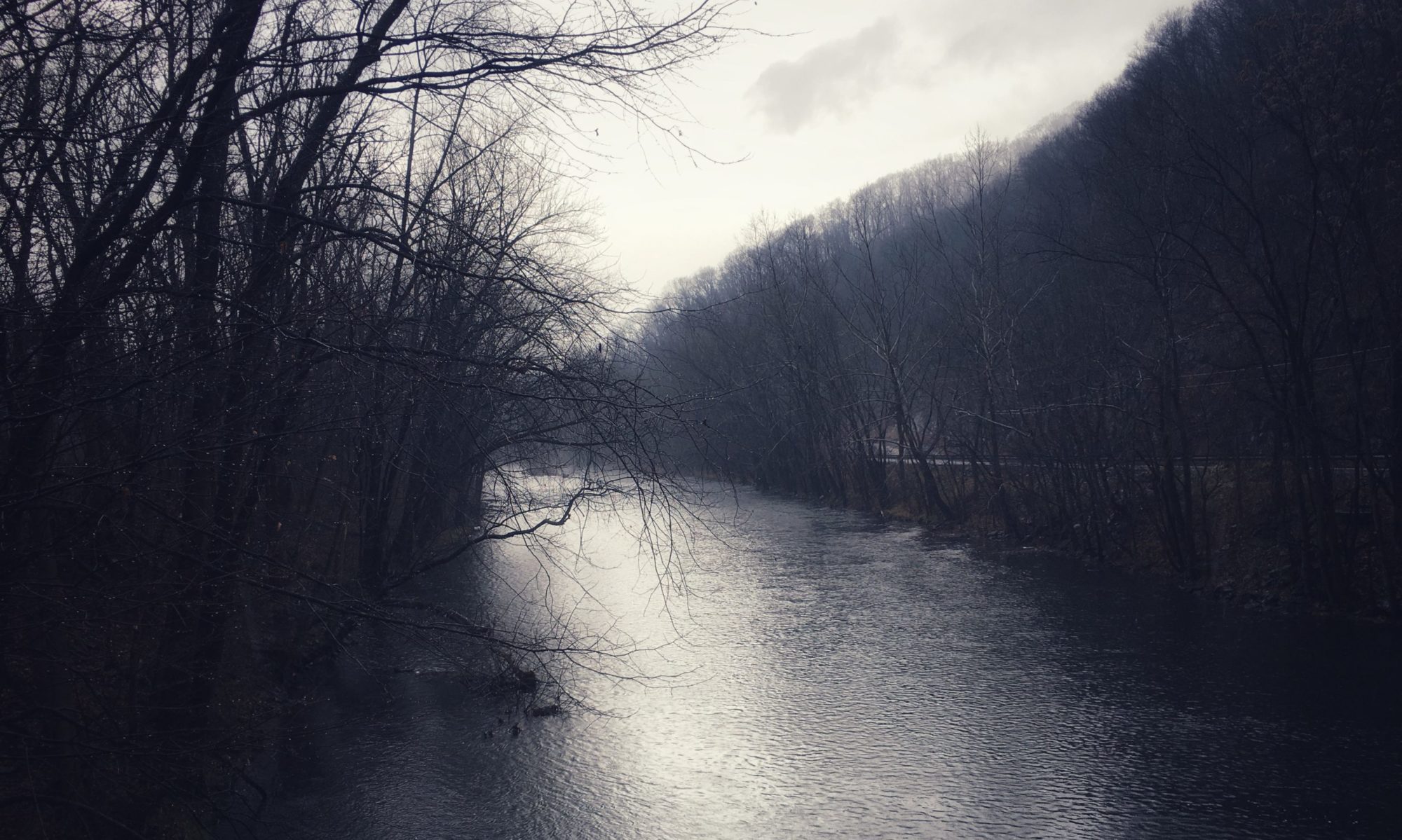
Year after year, the ageless spring returns: an indolent green swaying amid warm mist. The scent of pine mingles with the fragrance of evening flowers as the sun drops low among the willows on the riverbank, turning sand and cobbles a vivid red. Watercress crowds a spring among the rocks; in the bamboo grove, a dusting of fresh sprouts. Blue ridges arch like eyebrows above the gates – eyelids the color of dawn. Orchid bent like a bow under the weight of dew, like the loveliest of mountains, weeping in the vast spring sky.

The dancer’s girdle pendants were stolen from a phoenix wing. Her trailing sashes shimmer with veins of silver. Orchid and cassia exhale a fragrant incense; lotus and water caltrop serve for the piled offerings. Out viewing the rain, she meets the Jade Princess; returning in her skiff, she encounters the River Goddess. High on beer she plays her flute, tying a rakish scarf around her golden-threaded skirt.

Image Hosted by ImageShack.us

She streaks across the sky – the bell-like call of a white stag; weaves through the water – a slap of shining scales. Her coiled hair seems poised for flight. Cheeks glow with a blend of every blossom’s hue. Spiraling locks frame her dimples, and dark brows mirror perfect lips. Light and airy as a butterfly on the wing, her insubstantial body makes even wind and sun feel shy.

Image Hosted by ImageShack.us

Neglected in her chamber, the incense burner grows cold, and the phoenix frozen in her mirror gathers dust. On feet of fog, riding the wind she returns: a shake of jade pennants heard faintly on the highest peaks.

Image Hosted by ImageShack.us
__________

This translation is of course dedicated to frequent Via Negativa commenter the Sylph. The photos are of pink lady’s-slipper, an orchid that grows in profusion here on Brush Mountain. As for fragrance, our wild azalea is second to none.

Cibola 98

This entry is part 97 of 119 in the series Cibola

Shiwanna/Esteban (cont’d)

What’s life worth
without such visions?
Be it the full three
score & ten, or cut
however short–as long
as there’s one, continual encountering . . .

It made my head hurt
when I read William
of Ockham–sanest
of mad Franciscans–outline
the blind alleys
down which a mind
can lead the soul
possessed
by abstraction.
Though he missed everything, of course . . .

Who will miss me—
even notice
my absence? Who,
if they kill Marcos, will believe
these Indians?
My name–who will say it?
My work–how to keep it up
with the gourd gone
& almost all my faith
scattered along the way?

The friar would tell me
to pray: I believe.
Help Thou my unbelief.

Circular reasoning, sure,
the classic type.
But what the hell
did Aristotle know?
Or Seneca?
Or Pliny?
The high priests of Reason,
bloodless,
ignorant of all beyond their borders,
equating their backwater sea
with the great Ocean.

What did I know? These Seven
Cities are a joke: seven dusty towns,
seven confections of mud.
As crowded with busy little souls
as termite mounds.

Or are there in fact
only six, as some
of my guides kept saying?
Perhaps the seventh is just
a place for ceremony,
a capital where no one’s allowed
to spend the night. Or else
they have a different accounting,
refuse to let the whole dissolve
into enumerated parts.
Or simply equivocate . . .

Drinking alone beneath the moon

by Li Bai
(a.k.a. Li Po, 701-762)

Yi hu jiu

I.

In the middle of the flowering grove, one jug of beer.
Drinking alone – no friends or family near –
I raise my cup, invite the moon to join me.
Counting my shadow, we’re a party of three.

But moon’s a lightweight, doesn’t know how to drink,
And shadow simply matches me cup for cup.
For now, though, they’ll do just fine, I think.
Spring is here, my friends! Let’s live it up.

I start to sing; the moon sways to and fro.
I get up and dance – shadow reels in disarray.
Sober, we crave the company of some jolly fellow;
Drunk, each goes his separate way.

Freed of all ties, yet bound forever more,
Let’s get back together on the galaxy’s far shore.

2.

Come April, and the village of Xianyang lies deep in fallen blossoms. Who can bear to be alone with sorrow in the spring? Who can gaze on such sights as these and stay sober? The unseen Maker rolls his dice: for you, wealth and a long life; poverty for you, and a life cut short. But one mug of beer can balance life and death, even out a thousand things that confound the intellect. Drunk, I lose track of heaven and earth, sitting alone on my mat, unmoving, unmovable. I end by forgetting that I ever existed at all: pure joy, then, for the no-one left behind!

3.

If Heaven above be not besotted with beer,
why should a Beer Star appear in heaven?

If Earth, too, be not a tippler,
why do we find a Beer Springs on earth?

With beer thus beloved above and below,
drinking beer can hardly be against nature.

I’ve heard a clear brew likened to a sage,
while the slang term for a cloudy beer is saint.

Since I’ve drunk deep of saints and sages,
what need have I to search for spirit guides?

Three cups, and the Great Way lies open;
a gallon, and everything resolves into Suchness.

Simply strive for beer and find contentment.
Don’t speak of these arcana to the sober ones.
_________

This translates three of the four sections of the original poem. The first section best imitates the rhyme and meter of the original.

“Sage” and “Saint” were code words for strained and unstrained beer during a period of prohibition in the early Tang Dynasty.

For other translations of ancient Chinese beer-drinking poems at Via Negativa, see The guest (Du Fu) and Night drinking at the western pavilion of the Flower of the Dharma Temple (Liu Zongyuan).

Cibola 97

This entry is part 96 of 119 in the series Cibola

Shiwanna/Esteban (cont’d)

Don’t believe it.
Neither what you hear in Cí­bola
nor the missed footfalls
of your jackrabbit
heart. Think
like a jackal thinks. Act
like a blacksmith: no
unnecessary blows. Remember
your unknown father
in whatever sort of heaven he may
still find good hunting.

They broke
the gourd: good riddance.
They stripped me
of amulets, bells & feathers,
tobacco pouch, even
the Holy Child
of Atocha: fine.
Maybe they’ll learn something.

From this cell I can hear
what goes on,
how they rush, argue,
fight among themselves.
Tonight I have nothing
but tomorrow I’ll make
their walls my armor–
you’ll see. They need
rain? I’ll bring it.
They’ll need protection
from Cortez,
from Coronado; I’ll be
their shield . . .

They have me figured
for a corpse. Well,
nothing cures whatever ails
like death. Old Bones,
you know what Hippocrates says:
we’re each sworn to guard
the other’s secrets,
yes? But in any case
you’re way too pale
for this climate.
That friar with
his shaved head sure ought
to earn a halo
from this, if only
to keep off the sun . . .

A good man, I admit. The rare
honest brownrobe, sure
of nothing but
God’s mercy. For that
I envy him. Still,
give me the license to think
my own, my will-
ful thoughts:
give me the desert
no one else wants, the shape-
shifting sands, the thorn-
scrub to explore
in an ever-diminishing circuit.
To chart, to map
in ever-growing detail,
right up to the smallest
spider mite,
a red mote in some vagrant angel’s eye.

For luck

More than once for luck I have placed my hand against the swollen abdomen of a pregnant woman, & perhaps this is why I have led such a charmed life (knock on wood). I remember in Honduras a patriarch laying his hand on the head of some small child or grandchild – casually, as if in everyday greeting: “Bendiga.” “Gracias.” And the child scampers off. But once, it, too, had been a nameless presence at the center of a woman’s body. The soul might well know everything before birth, a blind seer with a single working orifice, round & perfect as the good-luck doll the Japanese call Daruma – push him over & he always gets back up. Westerners may invoke Plato’s cave but in East Asia it’s Bodhidharma who sat in darkness, fat-assed legless zero nine years in the making. He even circumcised his eyes of eyelids to ward off sleep, that stealthy enemy of enlightenment. In Japan, Daruma dolls come in both sexes & the eyes are always left blank so the owner can paint them in, one at a time: the first when making a wish, the second when it’s granted. Aspiring politicians are especially prone to this practice, the Japanese equivalent of kissing babies. But only those without guile are ever truly blessed. Don’t be fooled; pregnancy is a dangerous business. The fetus feels the weight of your hand, it hears your voice & if you are careless in shepherding your thoughts it may think: Aha. You feel a sudden kick & draw back, only to receive a second jolt where you least expect it, unprepared for the jealous stirring from your groin, that flesh of your flesh grown desperate for blessings.

Cibola 96

This entry is part 95 of 119 in the series Cibola

Shiwanna/Esteban

The playing board retracts
its four scaly feet,
its tail,
its wizened head.
The players face each other
across the circle:
the red-painted gambler sits in the east,
the black-painted gambler in the west.

*

Each blows on his fingers,
whispers into his fists.

*

They toss the two-
sided sticks: red
& red
& red.
Red’s opponent feels the sticks turning
in his hands even before the cast.
Red & red again.

*

Now deep in the red, Black forfeits
more than his shirt. More.
More.

*

Stripped of rattles & feathers,
all his fetishes in
a muttering pile behind
his opponent’s back,
with his freedom now at stake,
what else can he put up?
No wife, no children–
I am all
I have left.

*

He removes his left arm
& sets it down by the pile.
Tosses the sticks:
red side up.
Removes his left leg. Red.
Right leg. Red.
Right arm. Red. Take off
your head.
Red,
red: your ribs,
your vital organs . . .
__________

For more on the symbolism of black and red, see the notes to Cibola 52.

Weeds

Image Hosted by ImageShack.us

Suddenly, beginning yesterday morning, my inbox is overflowing with German spam. Auslaender bevorzugt! Tuerkei in die EU! Deutsche werden kuenftig beim Arzt abgezockt! Graeberschaendung auf bundesdeutsche Anordnung! Vorbildliche Aktion! Volk wird nur zum zahlen gebraucht! Du wirst ausspioniert ….! And so on. The two that I open by accident contain no HTML, just Internet addresses. Clearly, the senders are “pharming,” trying to lure the curious or unwary into visiting a website where the seeds of malicious software lie waiting for new victims, new agents of dispersal. But why me? I don’t know a word of German. Whence this sudden invasion?

A few hours later I’m on a botanical field trip where one of the other participants is German and speaks authoritatively (albeit with a heavy accent) about plants and disturbance regimes, here and in Europe. We’re examining one of the few, tiny, remaining fragments of xeric limestone prairie in Pennsylvania. Why do European plants so easily out-compete ours? I ask. The German guy explains it’s because many of the northern European weeds have had a thousand years of intense cultivation to learn how to be aggressively weedy.

In North America, by contrast, the only really widespread form of anthropogenic landscape alteration was fire. Regular burning favors oak forests or savannas, depending on geology, exposure, moisture level, and other factors. This perpetuated openings that were originally natural, dating from a much warmer climatic period ending around 4,500 years ago in which wildfires were much commoner than they are today. Given fire, deep-rooted warm-season grasses can successfully out-compete cool-season grasses – mostly European imports. Large Pleistocene herbivores such as ground sloths and mastadons also played a role in originally creating these openings; in more recent times, the American bison helped spread prairie seeds between far-flung openings. Our trip leader describes an experiment with samples of different kinds of animal fur in order to find which would best transport the seeds of side-oats gramma grass, a prairie indicator species. Some pelts, such as deer and elk, shed the seeds immediately; the densely matted buffalo pelts picked up and retained side-oats gramma seeds like nothing else.

As with the wolf and panther, the wild bison still has a sort of ghostly presence in the Pennsylvania landscape, recalled by numerous toponymns: Buffalo Valley, Buffalo Creek, Buffalo Run. Run they did, but never fast enough. You can, however, still see them around – there’s a farmer who raises buffalo right on the other side of this hill, one of the local participants informs us. That really gets us talking!

We discuss spotted knapweed, a plant I only know from the railroad right-of way. Most of the invasive species in our hollow first appeared down along the tracks, hoboing in from god knows where. Spotted knapweed is that tall, rank stuff with the purple thistle-like flowers, but no spines. Turns out it doesn’t need them. It’s what they call allelopathic, poisoning the soil for other plants, and it’s potent enough to repel would-be grazers as well. Humans foolish enough to pull it out bare-handed may be susceptible to a nasty rash, but just as often it doesn’t leave a physical sign, going instead straight for the nervous system. You get recurring headaches, our trip leader says, and for a week or two, nothing will taste quite right.

Following local leads, we discover a previously unknown prairie remnant on the side of a hill above a plowed field; the owner mows it every few years because it’s a popular sledding hill in the winter. A number of indicator plants are intermixed with non-natives; the bright, orange-yellow patches of hoary pucoon are the most extensive we’ve seen all day. They intermingle with red columbine for a wonderful, natural garden effect.

One of the botanists shows us how to identify the planted pine trees: gather their long needles together in a sheaf and press them against the palm. If they bend readily, it’s red pine. If they threaten to go right through the hand, it’s Austrian pine. These are definitely Austrian, stout swords. We laugh nervously about possible ethnic parallels. Our erstwhile German participant has already bustled off to scout out other rare plants, convinced there was nothing more to be seen with us. Earlier, he had asked me to show him the location of another prairie remnant on the map. I explained how it was right across from the entrance to a very charming cave. “I have no interest in caves,” he said. It was impossible to tell from his intonation whether or not he meant that remark to sound friendly.

The strange thing about yesterday’s outing was that I had been to the first site we visited nine years before, but had absolutely no recollection of it. I figured something would eventually ring a bell, but nothing ever did.

*

Last night, I didn’t dream about either German botanists or Vorbildliche Aktion, as far as I can remember. In the last dream before I get up, a train I’m riding returns to the station so I can search for my boots. I had taken them off and left them somewhere without noticing how much harder and rougher the ground had become to my stockinged feet. In this dream – maybe in all dreams? – the surfaces of the world are as smooth as a lover’s thigh. But no true beloved could ever be half so innocuous.

The train travels backwards for one whole stop, disrupting service up and down the line. “We do this all the time,” the conductor says. “We’ve learned to accommodate the special needs of our passengers, who are uncommonly forgetful.” Everyone disembarks, and the other passengers wander off in search of coffee or newspapers. My companion helps me retrace my steps: over a metal bridge, through cobblestone alleys, into a slick-floored casino. Perhaps the boots were stolen right off my feet? I search through the Recent Acquisitions rack in a second-hand clothing store, and although I do find several pairs of army boots that look virtually identical to mine, none respond to my plaintive whisper. One large pair gleams, freshly spit-shined. They almost sneer. Their former owner couldn’t have made it through Day One of Basic Training.

In the very last place I look, there they are: old and comfortable, caked with limey mud, perhaps carrying a few seeds of side-oats gramma. Now I remember! But I had to swim upstream to the source, the very start of the dream. I take off the loaner pair of women’s boots – they’d been just a little tight – and step into my own with a sigh of pleasure. Read into this what you will. Me, I woke up. I lay in bed rehearsing the apologetic speech I would have to deliver to my fellow passengers. “From now on, I’ll always take the train,” I thought, “even if it never takes me where I want to go.”

*

This morning, a Baltimore oriole has begun persecuting his reflection in the window opposite my writing table. He’s not quite as aggressive as last year’s cardinal, preferring to sing rather than attempting a full-scale assault. From a perch two feet away he flutters up against the glass, singing loudly. It must confuse him the way his rival opens his beak at the same time he does, since his is the only song. He’s looking right in my direction as he does so. If I didn’t know better, I might think I was the intended target of his sharply worded messages.