
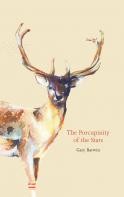
The Porcupinity of the Stars by Gary Barwin

The Porcupinity of the Stars The Porcupinity of the StarsGary Barwin; Coach House Books 2010WorldCatLibraryThingGoogle BooksBookFinder 
I ordered this book on the strength of the author’s video for one of the poems in it, “Inverting the Deer” (embedded below). I’d never heard of the author before, though he seems to be quite well known in Canada as a fiction writer and children’s author as well as a poet.

I’ve been dipping into The Porcupinity of the Stars off and on for a week now, and when I went to read it in a more methodical fashion this morning, I was a little abashed to realize how heavily my poem of last night, “Garden Party,” had been influenced by Barwin’s imagery. There’s no mystery where that nearly forgotten memory of buried TVs came from: the book fairly bristles with images of televisions and burial, and even the burial of televisions. Here, for example, is “Planting Consent”:

I carried my TV down the stairs
buried it on a hill
with a beautiful view

by spring a small antenna
sprouted in that place

somewhere under the earth
wispy clouds and the wingbeats of birds

Barwin is a surrealist, as this example demonstrates, and my favorite poems in the book were those that explored just a few images, as “Planting Consent” does. Some of the poems failed to cohere for me — which isn’t to say I didn’t still enjoy reading them. More than anything else, this book is fun, and even the craziest or most experimental poems have memorable lines and images. For example, the opening stanza of “A Roof Floored” —

the stone hopes for flight
the way a goose
wants power chords

— made me chuckle, thinking of Aldo Leopold’s treasured “goose music” turned into heavy metal. And I loved its closing lines, too:

we sit before the mirror
use night as a balast

So my inability to make complete sense of the poem as a whole is almost beside the point. I’ve read countless more accessible poems that didn’t make as big an impression.

Surrealism often serves decidely bleak poetic visions — I’ll be blogging at least one example later this month — but Barwin’s vision in these poems seems more comic than tragic. When dismemberments occur, they are more in the spirit of Rabelais than Goya. Nor is the comic worldview unequal to the global crises of the 21st Century, as Barwin shows in poems such as “We Are Family”:

an organism which sleeps
soft as a cloth

a baby in a bed full of babies
and the earth full of babies

“Glacier”:

I wake and switch on the bedside light
there’s a glacier in my bed
ice, it says
snow, it says
it turns and presses its cold mouth on mine

and “Shopping for Deer”:

when I die, I will remember the deer
I will remember its wheels and antlers
I will remember its flesh and lightning
its womb of silver bones

The title poem was a bit of a disappointment, being entirely too random for my taste, but the longer poem immediately preceding it, “Small Supper,” was a masterpiece, beginning with what I took to be a variation on the age-old conflation of human souls with birds — “we placed our shadows inside birds / where they couldn’t be found” — and ending with “a bird’s small shadow … in my chest”. Even in such a potentially serious poem, though, humor crackles in lines such as “The shadow of a shadow / is my friend” and “it’s not so much that Polly wants a cracker / but that the lark wants its small supper of sky”.

Barwin employs a large vocabulary of cultural references, ranging from the Old Testament to jazz to, in one poem, “old testament jazz.” I read a number of these poems to my friend Rachel, who felt that some of them evoked for her — and perhaps betrayed the influence of — specific surrealist painters. They’re certainly very vivid. I guess my take-away impression is of a wildness that seizes and infects, an ensorceling that is by turns grotesque and cybernetic.

I’ve barely begun to quote my favorite poems from the book; suffice it to say I’ll be returning to it often. I do want to mention one other thing about it that pleased me: it’s printed on very good quality paper, the kind with a grain. (Sorry, I don’t know much about paper!) So while the publisher does offer ebook options, I’d recommend paying a few dollars extra for the print edition. Also, it may not be apparent from the small image above, but the deer on the cover is wearing athletic socks. Which is almost as cool as the deer in the video Barwin made:

Watch on YouTube

Scruggs, Rich

We lost two great American artists today, Earl Scruggs and Adrienne Rich. It’s odd, isn’t it, how chance sometimes brackets two dissimilar lives like this, leading us to ponder each of their legacies in light of the other’s: the revolutionary banjo player and the radical feminist poet, he perhaps more influential in his field than she in hers, but not by much. I’ll let others write the tributes, but I do want to pause for a moment and remember.

And here’s another odd thing: when poets and musicians die, it changes the way we hear their work somehow. The recordings are suddenly colored by our awareness of the fact that there will be no more from them, and what we have is all we’ll get. Such recordings are part of history now in a way they weren’t before, even if they had already been hugely influential. Which is to say, I suppose, that they gain a mythic dimension, since now they connect us to the dead, whose voices or instruments remain as bridges between being and nothingness. Whatever else one may find when diving into a wreck, I think the sound recording is the eeriest of all artifacts, the ultimate in evanescence made nearly permanent.


Lester Flatt & Earl Scruggs – Foggy Mountain Breakdown

Diving Into the Wreck – poem and recitation by Adrienne Rich, video by U2bianSynic

Wanted to review: poetry audiobooks

Can anyone recommend some good audiobooks or audio chapbooks of work by contemporary poets (or contemporary translations of poetry)? Once again this April I’m going to try to blog about a different collection of poetry every day, but this time I’d like to expand the definition of “book” a little bit. If I’m reading, I still prefer paper to a screen, but I am also interested in multimedia collections of poetry, so I want to make room for a few in the line-up. (I’ll be making a greater effort to read out loud the regular books I blog about, too. More than ever, my emphasis will be on slow reading.)

Incidentally, if you’d like to browse my poetry-book-a-day efforts from past years, they’re tagged Poetry Reading Month 2011 and Poetry Reading Month 2010.

How to listen

This entry is part 4 of 39 in the series Manual


Download the MP3

Just as the tail bone is a vestigial tail, the ears are vestigial cabbages.

Wear a hat to ward off ear worms, which if unchecked can turn into ear moths.

Listen with the heart. It’s not really designed for that, but it gets bored just pumping blood all the time.

Listen with your skin: each body hair is an antenna.

Turn on, tune in, drop into a really comfortable couch.

That “still, small voice” is neither God nor conscience but a long-deceased great aunt with a few things still on her mind.

Take notes.

All sound can be heard as music, but not all music can be heard as music.

Your life did, in fact, come with a soundtrack—what have you done with it?

The listener, too, must improvise.

One chord is enough for most purposes—don’t be greedy!

Silence can take four basic forms: pregnant, shocked, utter, and radio.

Pregnant silence is the most tragic, since she always dies giving birth.

Compose in her memory a sonata for the ear trumpet.

One more new blog recommendation and a note about Odes to Tools

I can’t believe I forgot to mention the new blog that originally gave me the idea to write a post profiling new blogs yesterday! I am such a scatter-brain sometimes.

The blog is called A year of Mt. Tamalpais. Its description: “dreaming in the shadows of the Sleeping Maiden.”

Poet and blogger Maria Benet, author of Mapmaker of Absenses, began this so-far delightful and often moving record of Marin County, California’s “single most identifiable symbol” without any particularly lofty goals other than persistence:

Over the years and through many seasons, I’ve never tired of looking at the way the light and fog and rain work together to edit the mountain’s features, sometimes bringing out the depth of colors with a bold brush stroke and at other times rendering the solid ridges into gossamer. I’ve taken hundreds, if not thousands of pictures of Mt. Tam, mostly at random times of the day when the mountain seems to call out suddenly, demanding that I take notice and record the way a long, thin patch of fog slips fast over its peaks, or the way the narrow ray of winter sun slices through clouds to section the slopes with light, or the way, at the height of summer the ridges burst into a blaze with every conceivable shade of green.

So here is what I propose: a picture a day of the mountain that looms over our lives in this corner of the world.

Ideally, it would be best to take that shot at the same time and from the same place, every day. Knowing the way I work, this is not a realistic option. This is not just a question of my habits, but also of the eyes — of the vision becoming inhabited by a single perspective. With that approach I would be documenting a process over time, which is a fine project in itself, but not the one I want to launch.

A picture a day from the same place and same time would capture subtle changes, as well as those larger familiar ones wrought by the seasons. A robot would be the perfect candidate for that project. My project is about how the mountain gets itself seen in a daily life, in this case, mine. In other words, instead of my going to the mountain for data, I am going to let the mountain come to me in its power to make impressions.

So check it out. This is the sort of blogging project for which RSS feeds were invented. Sure, you could catch up once a week, but for maximum cumulative impact the photos, and Maria’s commentary, ought to be seen every day. If for some perverse reason you prefer the haphazard nature of Twitter to Google Reader, you can follow Maria there @alembic. And her main blog, small change, is worth following too, though it sounds as if it may be undergoing some not-so-small changes soon.

*

If price resistance, lack of physical space for new books or an extreme love of trees have prevented you from picking up a copy of my collection Odes to Tools yet, I have some good news: Beth at Phoenicia Publishing has just taken her first leap into e-book publishing, with my book as one of the first two to receive this treatment. The Kindle (MOBI) version is available through Amazon, but you can pick up either the MOBI or the EPUB directly from the publisher “to give a greater percentage of royalties to the author and greater support to independent publishing.” The price is $2.99 USD.

First “Words on the Street” book now available in print and electronic forms!

Words on the Street cover

It’s been a long time in coming, but I’m very happy to announce that a print and e-book collection of 109 satirical cartoons featuring Via Negativa’s original, imaginary guest-blogger Diogenes is now available from that famous London publishing powerhouse, Bauble Tree Books. (If you caught my announcement at the beginning of December and are wondering why we weren’t able to get it out before Christmas, here are all the gory details.)

Visit the Bauble Tree page for the book. Or save a click and go directly to the source(s):

Print edition at Lulu (£9.99 — $15.30 at current exchange rate)
Paperback, 224 pages

EPUB edition at Lulu (£0.99 — $1.52)
For Nook, iPad, iPhone, etc.

Kindle edition at Amazon.com ($2.99)

Kindle edition at Amazon UK (£2.00)

Amazon’s French site (I’m an “auteur”!), German site, Spanish site, and Italian site (€2.68)

All of the cartoons have been re-done from what I originally published here (which were small GIF files, many of them long since vanished into the ether, presumably due to server failure or retirement by the free image-hosting service I used). A significant number of Diogenes’ signs were re-written, and a couple are brand-new.

Also adding value to the book is a short preface by my friend Kaspalita, a UK-based Pureland Buddhist priest and blogger. Now you may be wondering, “Why a Buddhist? Why would you not ask a graphic artist to introduce a book of graphic ‘art’?” But Words on the Street, as an inaction comic, is all about sitting, and who knows more about sitting than a Buddhist priest? We could argue about the difference between mindful repetition of the nembutsu and humorous repetition of the same drawing with different words, but never mind. Here’s some of what Kaspa said:

Anne Bogart described great art as something that stops you in your tracks and won’t let you move beyond it. Dave Bonta’s few words provoke a similar arrest. His placards draw forth a wry smile and, as good satire should, leads us into a critique of the many questionable aspects of our society.

Bonta’s words are given another layer of meaning by their fixed context, the unchanging homeless character whose placard they grace. “Friend Me” takes on a completely different significance seen here, as opposed to on one’s favorite social networking site.

Each page I flick to raises a smile and then asks me to come back to it and think, and then to think again. In this book Dave moves towards cementing his reputation as satirist and as an important contemporary gadfly.

Hear that? “An important contemporary gadfly”! If anyone not as fully trustworthy as an ordained priest said that, I’ll bet you’d be inclined to raise an eyebrow, wouldn’t you?

Needless to say, reviews would be very welcome. I’m told some review copies of the digital version may be available — contact the publisher.

Keep in mind that all of my royalities from the sale of this book and ebook will go toward supporting the Via Negativa blog network, including the production (and hopefully much more reliable hosting!) of brand new Words on the Street cartoons. So think of it as a sponsorship for something you’d like to see continue. (Well, of course, you can also think of it as a fabulous Valentine’s Day gift if you like.)

Also in that vein, if you like Words in the Street and/or want to support Via Negativa, don’t forget to visit my storefront at CafePress. Send me photos or videos of Via Negativa t-shirts, mugs, etc. “in the wild” and I’ll be happy to post them with a link back to your blog, if you have one. (No need to include your face if you’re shy.) Ditto for photos of the book being read in unlikely places.

In fact, let me conclude this post with some shots of Cynthia Cox modeling a t-shirt with my personal favorite Words on the Street cartoon. Cynthia is an award-winning poet based in the Houston, Texas area whose work I first came to know years ago at a blog called the twitching line; she now shares poems, videos and other fun and wonderful things at mareymercy. Herewith her riffs on “Clichéd — please help” (click to embiggen):

Cynthia Cox cliche 1

Cynthia Cox cliche 2

Cynthia Cox cliche 3

On tedium

The tedium of the repetitious task: how could it be otherwise? But we all know a few people — saints of a kind — who so enjoy setting the world to rights that no essential task seems to weigh them down, and they add figures or enter data with perfect equanimity. What most of us would experience as a boring necessity strikes them as an opportunity to enjoy the seamless functioning of mind or body.

And it is really all about mindset, isn’t it? Those elders who had no choice but to knit if they wanted to stay warm in the winter might think today’s hobbyist knitters slightly mad, unless back in the day they happened to be of a creative bent. But I’m told that when an Amish man draws up a cost/benefit analysis of a project, the labor required to complete it will be listed as a benefit rather than a cost.

I imagine it was only after the Industrial Revolution that tedium became a nearly inescapable condition of life — and with it the necessity for diversion on an industrial scale. Most sports, too, seem mind-numbingly dull to the uninitiated: soccer with its endless running up and down the field, American football with its constant, sometimes lengthy breaks in play, baseball and golf with their general lack of excitement. A NASCAR race would be the very embodiment of treadmill monotony were it not for the thrill of the occasional crash. Commercial TV in the U.S. has 20 minutes of highly repetitive, typically stupid advertising per hour. If people can learn to find that kind of tedium entertaining, why not data entry?

I’m wondering whether the high levels of distraction produced by the modern diversion machine might not make tasks traditionally seen as tedious more desirable now, as rare opportunities for sustained attention. That might explain why, this evening, I had a hard time tearing myself away from a highly monotonous repair job at one of my websites that involves doing essentially the same thing to each of a couple hundred posts in sequence. The rain was drumming on the roof, the furnace cycled on from time to time, and there was no other sound but the clicking of my fingers on the keypad. I was tired but not quite exhausted, happy but not actively excited about anything in particular, and it was only after I reminded myself that the task at hand was, in fact, monotonous as hell that I remembered to be bored, and stopped so I could write yet another goddamned blog post.

*

(Update 1/12) Thinking about this further in the shower this morning, I’ve decided that the supposed link between repetition and tedium is even more of a red herring than I thought. Further to my example of repetitious things we tend to find pleasurable, it occurred to me that music is the ultimate in repetition — except when it isn’t. Over the years, I’ve learned to appreciate types of music at two extremes: atonal Western art music with virtually no repetition of anything, and highly repetitive, trance-inducing forms of world music. And remembering back to the first times I heard examples of musical genres I later came to love, such as blues, Appalachian string-band music and thrash metal, I remember in each case thinking, “This stuff all sounds alike! No way will I ever learn to like it.” We like to think that some tunes are inherently infectious, but I suggest they probably wouldn’t be so perceived by people from a radically different culture who hadn’t trained their ears to appreciate (in this case) Western melodic music on a diatonic scale.

So music may be the prototypical example of repetitiousness that we’ve learned to perceive as pleasurable. With the advent of mass-produced recorded music, we are for the first time in human history able to summon up virtually any kind of music on a whim — and I would argue that we do it largely to fight what we perceive as tedium. In this kind of use, as partly listened-to artificial soundscape, a lack of sufficient repetition can in fact be a real liability. To pick the extreme example I mentioned above, more challenging avant-garde music has few fans. But even traditional, melodic classical music, with its frequent changes in tempo and volume, is less than ideal as accompaniment to many tedious tasks in an industrial society, such as shopping, housework, or commuting by automobile. Pop music is much more effective at cutting through the noise, and perhaps inducing a state of mild trance.

I think the comments below by John Miedema and “mostly quiet regular” get at the essence of tedium: it is intimately associated with powerlessness. Thus while I can enjoy sitting on my front porch watching the rain or hanging out on a street corner watching people go by, I’m very likely to perceive sitting in a doctor’s waiting room as tedious, even if it’s full of interesting people. Sports — my example above — can be of absorbing interest because fans identify closely enough with the teams or players to feel enmeshed in the action, and of course certain kinds of crowd behavior can produce intense feelings of shared power. And with music, once we become attuned to a particular piece or genre, our entire mind-body is engaged, and one experiences — for lack of a better term — harmoniousness.

A final idea, then: what makes a tedious task tedious is the split it perpetuates, and perhaps exacerbates, between thinking and feeling. And I’ll stop here before this argument itself becomes too unbearably tedious by attempting to cover all the bases (sports metaphor FTW!) and thus in a way disempowering the reader, who after all, on the Internet, has a certain expectation of being an active participant in the exchange of ideas and not merely a passive consumer of them. (But I’m beginning to understand how real philosophers can write entire books on, for example, happiness.)

Ice and Gaywings

Ice and Gaywings
click to order from Phoenicia Publishing

At qarrtsiluni today we announced the publication of a new collection of poems: Ice and Gaywings by Kenneth Pobo. This might be of interest to Via Negativa readers for several reasons: the book was selected as the winner of our 2011 chapbook contest by VN contributor Luisa Igloria; the cover includes one of my own photos of gaywings (AKA fringed polygala) in bloom; and most importantly, the poems themselves are meditative, understated, urgent, and full of details about the natural world. Though Ken and his partner live in eastern Pennsylvania, they’ve been visiting the Wisconsin north woods for many years, and this collection is a sort of love letter to that part of the world. Let me just quote what Luisa had to say about it:

The experience I value most in reading this collection is the way its language (never romanticized) and tone (never overwrought) allows me to settle with increasing depth into the poems’ rhythms and precise observations — about the natural world, now only partially reclaimable from so many forms of artifice; about the intrusions of contemporary urban life and culture; about histories older than us that haunt and shadow place. And finally, its urgent reminder to listen, look, and learn to dwell again.

You can read all the poems at the online version of the book, which has been one of my projects this autumn. I’m kind of pleased with how it turned out. I enjoy the challenge of making online collections of poetry that people will want to browse. Last year, for Clayton Michaels’ Watermark, I hit on the idea of taking the abstract artwork we used for the cover of the paper edition and dividing it up into smaller images, a different one for every poem, with little arrows for navigation icons. It seemed essential to give each poem its own page, so it would room to breathe. This year, however, I started off looking at horizontally scrolling themes, and though I didn’t end up going that route (maybe next year!) it did push my thinking pretty far outside the usual box. I ended up adapting a WordPress theme designed for software documentation, with all the poems on one vertical page which expands or collapses, accordion-style, as the titles are clicked. (I did add permalinks below each poem for those who desire a more pristine reading environment — or just need the link.)

I hope readers don’t find this javascripty behavior too distracting. What I really liked about the design was the way it kept distractions to a minimum. Thanks to this unique arrangement, I was able to dispense with sidebars (or bottom bars) altogether — in WordPress terms, this is a site with zero widgets. I kept the page menu to a bare minimum, and decided not to hack the theme to add chronological posts back in; a static page would do fine for the news section, I thought. Anyway, I won’t bore you with all the details. Suffice it to say I had a lot of fun, even if I did have to re-do much of my work after I was kicked off my former webhost two weeks ago. Go take a look — and settle in with a cup of tea for a nice long read.

A-shantying I did go

Watch on Vimeowatch on YouTube

Here’s an example of the sort of shenanigans we get up to around here. Well, O.K., this is not perhaps a typical Central Pennsylvania party — but sea-shanty sing-along potlucks are happening twice a year now, thanks to the planning skills and infectious enthusiasm of Steven Sherrill, whom I interviewed for the Woodrat podcast a while back. (And speaking of the podcast, I hope to present a lengthier selection from our sing-along in audio form here at some point.) Songs included in the video, in all or in part: “Haul Away Joe,” “Hanging Johnny,” “Haul on the Bowline,” “South Australia,” and “Wondrous Love” (not a shanty, but it has the same tune as “Captain Kidd,” which we also sang). The somewhat disturbing paintings in the basement are all Steve’s work. The drink of choice was mulled cider spiked with rum.